The New Economy of Attention


Have you listened to Tubular Bells?
I believe most people who care about music, not just as background noise, have, at some point in their lives. You may remember where you were when it finally clicked, or maybe it never did. Either way, don’t worry. This is not an attempt to litigate Mike Oldfield’s tastefulness, prog rock excesses, or enduring cultural shadow. Like it or don’t. That’s not the point.
The point is that Tubular Bells speaks for itself. It is nearly impossible to hear it and then to wonder and learn that it was largely written, performed, and recorded by a nineteen year old, alone in an attic, and not conclude that something extraordinary happened there: a fifty minute mostly instrumental symphonic fairy tale of that magnitude, built almost without precedent, without much of a marketing campaign, without star portraits, without a carefully curated myth. There was no lifestyle narrative attached to Oldfield, no media training, no identity playbook.
The music was the message. And the message traveled.
It circled the planet, embedded itself in popular culture, entered living rooms, and still resonates today. Not because it was optimized, but because it was undeniable.
A few years later, there was the Alan Parsons Project, founded by the eponymous sound engineer whose résumé already included work at Abbey Road Studios on albums like Dark Side of the Moon. Together with singer and composer Eric Woolfson, Parsons released a series of musically acclaimed and sonically groundbreaking albums, all without ever going on tour. The Project was conceptual and studio-based. They did not market their faces or their personas. Vocal duties were shared among guest singers rather than a fixed frontman persona. The focus remained firmly on concept, sound, and composition. Eventually, they lost momentum with the rise of MTV, a medium that demanded faces as much as songs. Still, their catalog remains a masterclass in production, storytelling, and pop rock architecture.
Fast forward forty odd years and try to imagine such a thing happening again.
Today, Spotify’s CEO refers to music as audio content. Suno’s CEO openly frames music as an interactive user experience, closer to gaming than composition. These are not throwaway quotes. They are mission statements from Big Tech**. They reveal how music is now positioned inside a broader attention economy, one where sound is no longer the destination, but one node among many in an engagement loop.
To be clear, this is not an anti pop star argument. I love pop music. Pop has always been a canvas for identification, for lifestyles, for idols. Performance, image, charisma, all of this is part of music’s long tradition. Nobody would seriously argue that Freddie Mercury’s voice alone carried Queen, or that Kate Bush’s genius existed separately from her theatricality. Their brilliance was holistic. The music went straight to the heart and fused seamlessly with the performance.
As a brief aside worth noting, Kate Bush deserves a moment of attention here. At just nineteen, she became the first female artist in the UK to reach number one with a self-written song, Wuthering Heights. From the early 1980s onward, she went further still, writing, composing, arranging, performing, and producing her own records. At a time when creative control was largely held by (male) producers and labels, especially for women in pop, Bush refused that model. She was not merely the face or the voice of her music, but its guiding force. In an industry built around image and mediation, that level of control was quietly extraordinary.
And yes, the world still responds in a comparable way today. People feel something real for Taylor Swift or Harry Styles. Their songs matter. They resonate. Audiences cry, project, identify, and grow up with them. That emotional bond has not vanished.
But something else has shifted underneath.
What’s changing is not the existence of stars, but the hierarchy of values. Music is no longer the gravitational center. It is increasingly an accessory. In a world of ever shrinking attention spans, endlessly refreshed feeds, and a permanent scramble for virality, attention itself has become the true currency. Not songs. Not albums.
Mainstream media channels that once acted as cultural amplifiers are eroding. Radio, once a gatekeeper and unifier, is in decline. Algorithms have replaced editors, and editors, whatever their flaws, used to listen.
The big EDM festivals of the 2010s foreshadowed this shift. Multi million dollar headliners, massive LED walls, fireworks timed to drops. It was spectacle first, bombastic sound. Still, someone had to make the music. There was at least a moment, alone in a studio, where music was the core artifact.
That moment is no longer guaranteed.
Today, music can be generated, adjusted, personalized, remixed endlessly, not as an act of expression, but as a means of retention. Hooks are engineered for the first three seconds. Choruses are designed to survive without verses. Songs are auditioned not by how they unfold, but by how they interrupt scrolling.
This isn’t about nostalgia. It would be lazy and wrong to claim that things were simply better back then. Every era believes that myth. The past was exclusionary, slower, and often cruel to those outside narrow molds.
What has changed, though, is how we listen.
I have always been drawn to artists because their music touched me first. Only later did I become curious about the person behind it, the face, the story, the contradictions and the (often short) lives they lived. The arrow pointed inward, from sound to soul. Increasingly, it points the other way around. Identity first, sound second, sometimes third or fourth. Still, can you listen to Amy Winehouse and not feel something of an inescapable gravity in your chest?
When music becomes optional in its own ecosystem, something fundamental is at risk.
This doesn’t mean composers will disappear. They won’t. There will always be prodigies, obsessives, outsiders, people compelled to translate ideas into sound with breathtaking ambition and talent. The human impulse to create structure from silence is not going anywhere. The real question is quieter, and more unsettling.
Will it still be possible for such work to be heard by the world on its own terms?
Could a modern Tubular Bells, fifty minutes long, instrumental, patient, unoptimized, cut through today’s noise without becoming a meme, a brand, or a content moment? Could it travel far without being wrapped in narrative scaffolding, influencer validation, or platform choreography? Or does the economy of attention now demand that music justify itself before it is allowed to speak?
We are not witnessing the death of music. But we may be witnessing the end of an era in which music alone was enough.
Last but not least, for those still out there who are not afraid to spend a full hour with an opus that can be genuinely demanding at times, and despite being no less genius in my humble opinion, though that may be debatable, there is one more recommendation. Tune into Mike Oldfield’s 1990 album Amarok. Yes, he did it again! Rumor has it that it is worth paying close attention to the Morse code encoded in synthesized instrument sounds at minute forty eight. A special message, allegedly, to the entrepreneur who once had the guts to release Tubular Bells in the first place. It seems that relationship did not age particularly well. Then again, such are the turns and tides of the music business.
The album reached only number forty nine in the UK charts. Oldfield did not appear bothered.
**Sources:
 Matt Mullen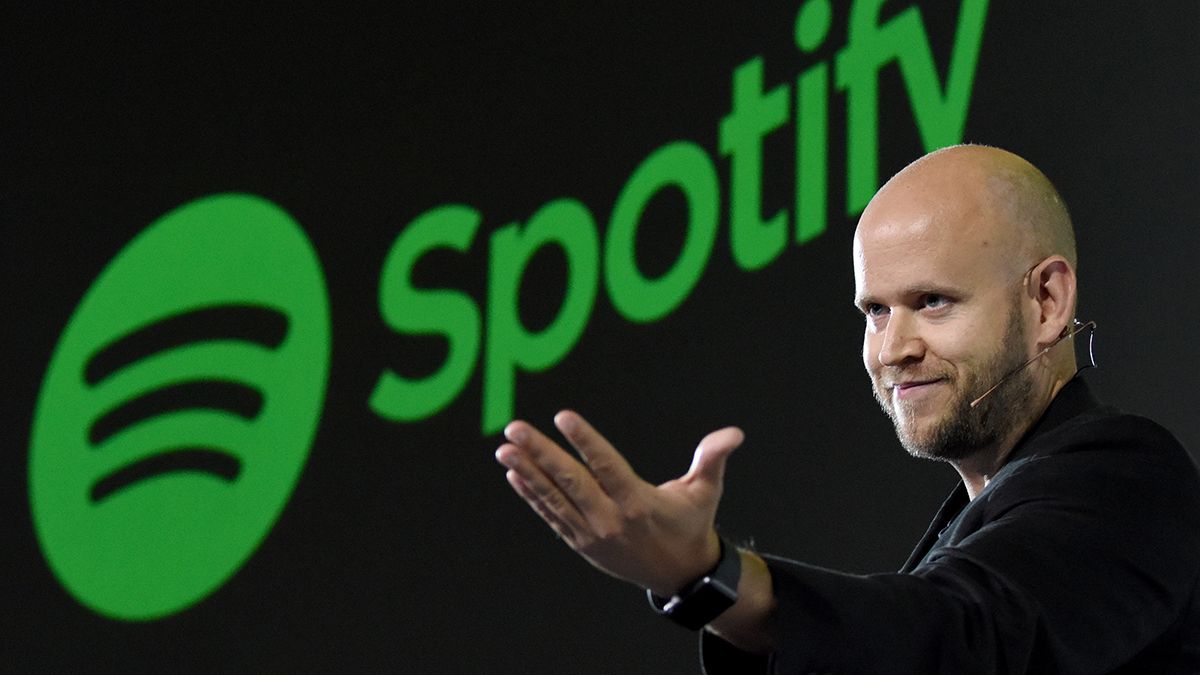
 Daniel Griffiths